

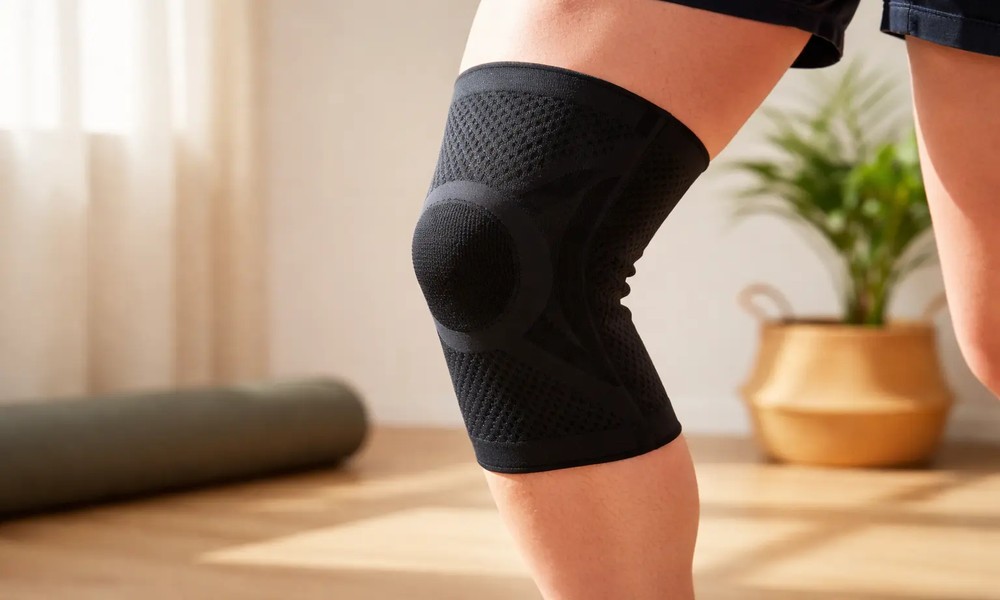
Knee joints take more daily punishment than most people give them credit for. Walking, sitting, climbing stairs, and even standing for long stretches put a continuous load through a joint that has very little room for error when something goes wrong. Choosing a knee support without knowing what you’re looking for often means buying something that either does too little or restricts movement more than it should. If you’ve looked at the range on myaster and felt unsure where to start, this breakdown covers the key decisions plainly.
Which type of knee support actually matches your condition?
This is the first question worth answering before anything else. Compression sleeves apply uniform pressure around the joint and work well for mild soreness, post-exercise recovery, or general instability that doesn’t require rigid structure. They’re thin enough to wear under clothing without bulk.
Stabilising braces with lateral stays are built for more specific mechanical issues. The rigid supports along the sides limit sideways movement, which matters when the knee tends to buckle or when ligament strain has left the joint feeling unreliable. For more serious clinical needs:
- Hinged braces control the range of motion during rehabilitation after surgery or significant ligament injury
- Immobilisers restrict movement almost entirely, and are used in the early stages of recovery from fractures or operations
- These are typically selected with medical guidance rather than chosen independently
Does the patella design change how a support performs?
More than the product descriptions usually make clear. Open patella supports have a cutout at the front that takes pressure directly off the kneecap. This matters for conditions like patellofemoral pain syndrome, where compression against the kneecap aggravates symptoms during flexion. Closed patella designs wrap the entire joint and work better when the goal is even compression across a broader area, such as managing swelling or general ligament instability. Getting this detail wrong is one of the more common reasons a support feels uncomfortable despite being the right size.
How much does fabric choice affect daily wearability?
Considerably, especially for anyone wearing a support for several hours at a stretch. Dense neoprene retains heat, which can ease stiffness in cold conditions but becomes genuinely uncomfortable during activity or in warm climates. Perforated and mesh-based materials circulate air and manage moisture far more effectively, making extended wear much less of an issue. Practical points to factor in:
- Airprene and airmesh fabrics are the better choice for active use, exercise, or full-day wear
- Neoprene suits shorter sessions or cooler conditions where warmth assists joint comfort
- People with sensitive skin should check fabric composition, as synthetic materials worn for long periods can cause irritation
Knee supports don’t size like clothing, and that trips a lot of people up. Most ask for the circumference of your knee measured right at the kneecap. Not your thigh, not your calf. Just that one point. Hinged braces sometimes require measurements in two or three places, but even then, it’s a five-minute job with fabric tape.
What actually goes wrong when people skip this step is either that the support keeps sliding down during the day, or it’s tight enough to leave marks on the skin by the afternoon. Both mean it’s not doing the job it’s supposed to. Neither problem has anything to do with the product itself.


