

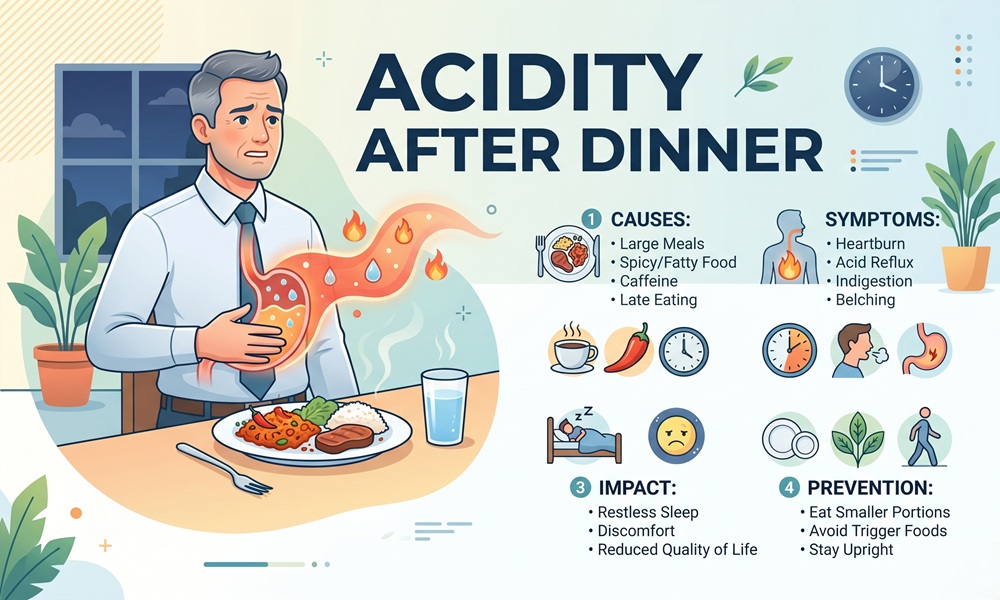
That burning in your chest after dinner, the sour taste creeping up your throat, the bloating that keeps you up at night — that is acidity, also known as acid reflux or heartburn.
It is one of the most common digestive complaints in the world. But why does it specifically hit after dinner — and rarely after breakfast or lunch?
Why Acidity Strikes After Dinner Specifically
Three things make dinner the worst meal for acid reflux:
- Your digestion naturally slows after sunset. Food stays longer in the stomach, giving acid more time to back up.
- Most people lie down within 2 hours of dinner. Gravity stops helping keep acid down.
- Late-night meals tend to be heavier, oilier, and spicier than other meals.
What Acidity Actually Feels Like
- Burning sensation in the chest or upper stomach
- Sour or bitter taste at the back of the throat
- Bloating and excessive belching
- Discomfort that worsens lying down
- Sore throat or hoarseness in the morning
- Trouble sleeping due to chest discomfort
Top 10 Causes of Acidity After Dinner
1. Eating Too Late
Dinner within 2 hours of bedtime is the #1 trigger. The stomach should be mostly empty before you lie flat.
2. Overeating
Large meals stretch the stomach and weaken the LES (lower esophageal sphincter) — the valve that keeps acid down.
3. Spicy and Oily Foods
Chili, fried snacks, deep-fried curries, samosas, and pakoras all aggravate acid production.
4. Lying Down Immediately
Lying flat means stomach acid easily flows back into the esophagus.
5. Caffeine, Alcohol, and Carbonated Drinks
Coffee, tea, soda, and alcohol all relax the LES.
6. Acidic and Trigger Foods
Tomatoes, citrus, chocolate, mint, garlic, raw onion, and vinegar are all common triggers.
7. Smoking
Nicotine relaxes the esophageal valve and increases acid output.
8. Tight Clothing
Tight waistbands and shapewear add pressure on the stomach.
9. Stress and Late-Night Phone Use
Stress raises cortisol, which increases acid. Blue light at night worsens sleep, indirectly worsening acidity.
10. Excess Body Weight
Belly fat presses on the stomach and pushes acid up.
Foods That Trigger vs. Foods That Calm Acidity
| Triggers (Avoid at Dinner) | Helpers (Safe at Dinner) |
| Fried, oily, deep-fried foods | Steamed or grilled vegetables |
| Spicy curries, chili, hot sauce | Plain dal-rice, khichdi |
| Tomato-based heavy gravies | Bottle gourd, ridge gourd |
| Carbonated drinks, soda | Plain water, coconut water |
| Coffee, strong tea, alcohol | Chamomile, fennel tea |
| Chocolate, mint, citrus | Banana, apple, papaya |
| Raw onion, garlic, vinegar | Cumin, fennel, ajwain |
| Heavy desserts, cream | Curd, buttermilk (chaas) |
15 Proven Remedies for Acidity After Dinner
Instant Relief (Works in 5–20 Minutes)
- Drink a glass of cold milk or plain water with a pinch of baking soda.
- Chew on fennel seeds (saunf) — they neutralize acid.
- Sip on cold coconut water.
- Chew a piece of ginger or sip warm ginger water.
- Drink cold buttermilk with a pinch of cumin.
- Chew sugar-free gum for 20 minutes — saliva neutralizes acid.
- Take a slow 10-minute walk (not running).
Long-Term Prevention
- Finish dinner at least 3 hours before bed.
- Eat smaller portions. Try the “half-plate rule.”
- Sleep on your left side — proven to reduce reflux.
- Elevate the head of your bed by 6–8 inches.
- Lose excess belly fat.
- Quit smoking; limit alcohol.
- Identify your personal triggers with a food diary.
- Manage stress with breathing or yoga.
Best Sleeping Position for Nighttime Acidity
Multiple studies confirm: sleeping on the LEFT side dramatically reduces nighttime reflux because the stomach sits below the esophagus on that side. Sleeping on the right side or flat on the back is the worst for acidity sufferers.
Home Remedies vs. Antacids: When to Use What
| Scenario | Best Option |
| Occasional mild burning | Fennel water, cold milk, walking |
| After heavy oily dinner | Buttermilk + ajwain |
| Sharp burning that won’t stop | OTC antacid (Gelusil, Digene, ENO) |
| Daily acidity for 2+ weeks | See a doctor — possible GERD |
| Pain with vomiting or weight loss | Urgent medical care |
Warning Signs: When Acidity Is Actually GERD
If you have acidity more than 2–3 times a week for weeks, regular doses of antacids that no longer work, difficulty swallowing, chest pain not relieved by antacid, vomiting blood or black stools, or sudden weight loss — see a gastroenterologist. Untreated GERD can lead to ulcers or, rarely, esophageal cancer.
Frequently Asked Questions
Why is my acidity worse at night than during the day?
Acid production peaks around 10 PM, gravity stops helping you, and lying down lets acid flow upward.
Can drinking water at night reduce acidity?
Yes — a small glass helps dilute acid. Avoid gulping large amounts, which can bloat the stomach.
Is cold milk really good for acidity?
For most people, yes — it temporarily neutralizes acid. But people who are lactose intolerant may feel worse.
Should I take antacids every night?
No — long-term daily use of antacids (especially PPIs) without medical guidance can cause nutrient deficiencies and bone loss.
Acidity after dinner is rarely random. It is your lifestyle, timing, and food choices talking to you. Eat earlier, eat lighter, sleep on your left side — and most cases of nighttime acidity will quietly disappear.


