

What This Article Has That Others Don’t
Most guides just say “drink milk.” This one goes deeper. You will learn how capsaicin activates pain receptors (the same ones that detect heat), why chili oil hurts more than fresh chillies, the link between spicy food and IBS, when to ask your doctor for an H. pylori test, and a 24-hour recovery plan to soothe a flared gut.
Why Spicy Food Hurts Your Stomach
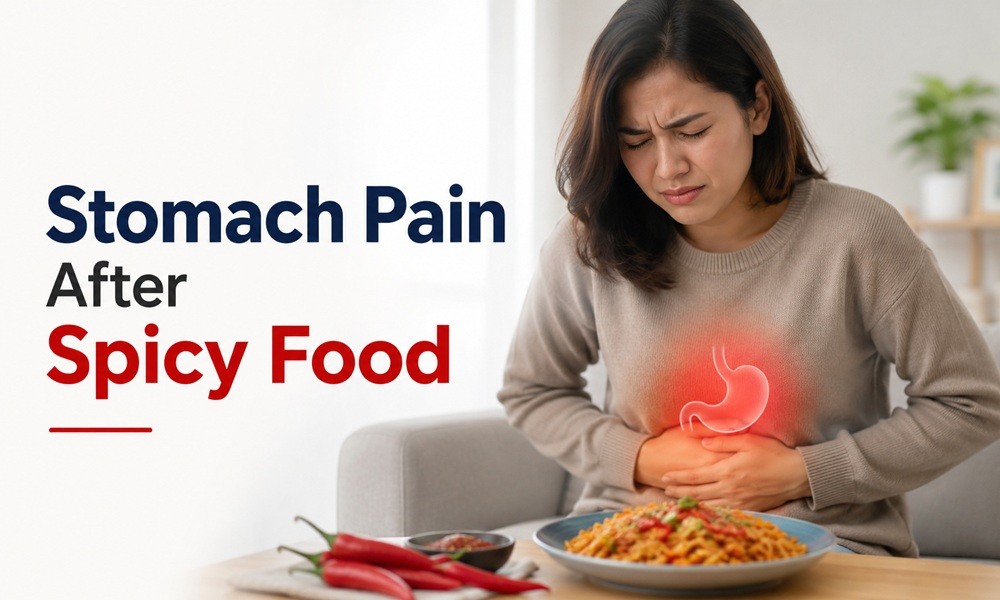
The active compound in chillies is capsaicin. It binds to TRPV1 receptors – the same nerves that sense heat and burning. Your brain reads the signal as pain.
In the stomach, capsaicin can:
- Trigger extra acid production
- Irritate the protective lining
- Speed up gut movement (cramps, diarrhea)
- Worsen reflux
For most people, the discomfort is brief. For people with reflux, ulcers, gastritis, or IBS, it can be sharp and lasting.
What the Pain Usually Feels Like
- Burning in the upper stomach
- Sharp cramping
- Heartburn rising into the chest
- Bloating and gas
- Nausea
- Diarrhea (sometimes hours later)
7 Common Causes of Stomach Pain After Spicy Food
1. Acid Reflux (GERD)
Spicy food relaxes the lower oesophageal sphincter. Stomach acid leaks up, causing chest burning and pain.
Signs: Burning behind breastbone, sour taste, worse when lying down.
2. Gastritis (Inflamed Stomach Lining)
Repeated spicy meals can irritate an already inflamed lining. Symptoms include burning pain, nausea, bloating, and fullness.
3. Peptic Ulcer
Sores in the stomach or duodenum make spicy food extremely painful. Often linked to H. pylori bacteria or long NSAID use (like ibuprofen).
4. IBS Sensitivity
People with irritable bowel syndrome have an extra-sensitive gut. Even small amounts of spice can trigger cramps, diarrhea, and bloating.
5. Functional Dyspepsia
A sensitive but otherwise healthy gut. Spice causes pain even without visible damage.
6. Gallbladder Issues
Fatty spicy meals can trigger gallbladder pain – sharp right-sided pain that may shift to the upper back.
7. Food Intolerance to Ingredients
Sometimes the cause is not the chili. It could be onions, garlic, or fried ingredients in the dish.
Spicy Food vs. Other Causes: Quick Comparison
| Symptom | Likely Cause |
| Burning chest pain | Acid reflux/GERD |
| Sharp upper stomach pain | Gastritis or ulcer |
| Cramping with diarrhea | IBS or food intolerance |
| Right-side sharp pain | Gallbladder |
| Pain shifting to lower right belly | Appendicitis (urgent) |
| Pain with vomiting blood/black stool | Bleeding ulcer (emergency) |
Fast Relief: What to Do Right After Eating Spicy Food
1. Sip Cold Milk or Eat Yogurt
The fat and casein in milk break down capsaicin. Yogurt also coats the stomach.
2. Eat a Slice of Bread or Rice
Plain starch soaks up extra acid.
3. Try a Banana
Bananas are alkaline and soothing.
4. Take an Antacid
Calcium carbonate (Tums) or magnesium-based antacids neutralise acid within minutes.
5. Stay Upright
Lying down lets acid flow back into the throat. Stay sitting for at least 30 minutes.
6. Sip Cool (Not Cold) Water
Helps move spicy food through the stomach. Avoid ice water on a hot, irritated gut.
7. Avoid Coffee, Alcohol, Smoking
All three worsen the irritation.
What to AVOID When in Pain
- Coffee and strong tea
- Alcohol and carbonated drinks
- Citrus and tomato (more acid)
- Greasy and fried food
- Chocolate
- Lying flat or napping right away
- More spicy food the next meal
24-Hour Recovery Plan
Use this if your stomach is irritated after a spicy meal.
First 4 Hours
- Sip warm water
- Eat plain rice or banana
- Take antacid if burning
Next 8 Hours
- Bland foods: oatmeal, toast, boiled potato
- Yogurt or buttermilk
- Avoid caffeine, alcohol, spice
Next 12 Hours
- Light protein: dal, paneer, eggs
- Cooked vegetables (no raw onion or garlic)
- Coconut water for electrolytes
Day After
- Eat smaller meals
- Avoid spice for 2-3 days
- Walk after meals
Long-Term Tips to Prevent Pain
- Eat smaller portions of spicy food.
- Pair spice with fat – a little ghee or yogurt cushions the stomach.
- Cook your peppers – cooked chillies are easier to handle than raw.
- Don’t eat spicy on an empty stomach.
- Skip late-night spicy meals – they worsen reflux at bedtime.
- Hydrate well.
- Build tolerance slowly – gradual exposure helps.
Foods That Soothe an Irritated Stomach
| Food | Why It Helps |
| Yogurt and buttermilk | Cools the gut |
| Bananas | Alkaline and gentle |
| Rice and oatmeal | Absorb acid |
| Coconut water | Replaces electrolytes |
| Ginger tea | Calms nausea |
| Boiled potato | Bland and filling |
| Aloe vera juice | Heals lining (consult doctor) |
| Plain chamomile tea | Reduces inflammation |
When to See a Doctor
See a doctor if you have:
- Pain lasting more than 24-48 hours
- Vomiting blood or coffee-ground vomit
- Black, tarry stools
- Severe pain that wakes you at night
- Unexplained weight loss
- Pain after every meal, not just spicy ones
- Fever with pain
- Trouble swallowing
A gastroenterologist may run tests:
- H. pylori breath or stool test – for ulcers
- Endoscopy – to view the stomach lining
- Ultrasound – to check the gallbladder
Should You Stop Eating Spicy Food?
Not always. Moderate amounts of spicy food are linked to better metabolism and even lower mortality in some studies. But if you have:
- GERD or reflux – cut back
- Gastritis or ulcers – avoid until healed
- IBS – track triggers and limit
- Gallbladder problems – avoid until evaluated
Listen to your body. Pain is a signal, not a punishment.
Quick Comparison: Chili Oil vs. Fresh Chillies
| Type | Effect on Stomach |
| Fresh green/red chilli | Sharp but short-lived heat |
| Dried red chilli powder | Stronger and lasts longer |
| Chili oil/crisp | High capsaicin per spoon; can linger and worsen reflux |
| Black pepper | Mild irritation; less than chillies |
If chili oil hurts more, switch to fresh chillies in small amounts.
Frequently Asked Questions
Why does my stomach hurt the day after spicy food?
The lining may still be inflamed. Capsaicin can also speed up the gut, causing diarrhea hours later.
Can spicy food cause stomach ulcers?
No, but it can worsen existing ones. H. pylori bacteria and NSAIDs are the main causes of ulcers.
Is milk really the best fix for spicy stomach pain?
Yes. The fat and casein break down capsaicin better than water.
Can I build tolerance to spicy food?
Yes. Gradual, regular exposure helps the body adapt – but the irritation continues even if the burning sensation fades.
Should I take antacids regularly if I eat spicy food often?
No. Use them as needed. Frequent use can mask deeper issues. Talk to a doctor.
Can spicy food cause IBS or just trigger it?
It does not cause IBS. It can trigger flare-ups in people who already have it.
Why does my chest burn after spicy food?
That is acid reflux. Spicy food relaxes the valve between stomach and oesophagus, letting acid rise.


