

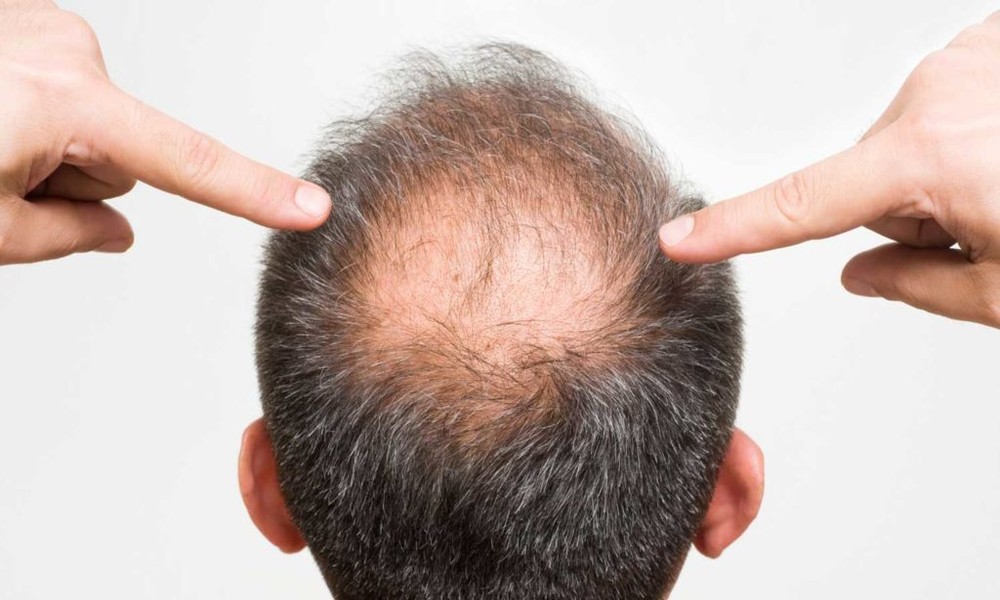
Most people notice hair loss and thinning gradually. A wider parting, a hairbrush that collects a little more each morning, a hairline that has shifted quietly over two years without a single defining moment. By the time the pattern is visible enough to act on, months of follicular change have often already occurred beneath the surface.
Hair Loss and Thinning Affect More People Than You Think
Androgenetic alopecia, the most common form of patterned hair loss, affects approximately 50 percent of men by the age of fifty and up to 30 percent of women by their mid-thirties, based on population studies across South Asia. Telogen effluvium, the clinical term for stress-induced diffuse shedding, is increasingly prevalent among working adults in urban environments where sustained cortisol elevation has become a daily reality. Postpartum hair thinning affects a majority of women who have recently delivered, with shedding typically peaking between months two and four after birth.
The cultural tendency to attribute hair fall to seasonal change, hard water, or recent stress is not unfounded. These factors do trigger temporary shedding that resolves as the cause resolves. The clinical challenge is distinguishing between reactive temporary shedding and progressive follicular miniaturisation, because the two conditions require different interventions and produce very different outcomes when left unaddressed for the same length of time.
Why Your Scalp Condition Determines How Hair Loss Progresses
The scalp is not a passive surface. It is a biological environment in which follicles cycle through active growth, transition, and rest phases in response to hormonal signals, nutrient availability, and local inflammatory conditions. When that environment is disrupted, the hair it produces changes with it. Understanding the three primary mechanisms through which scalp environment drives hair loss and thinning clarifies why surface-level treatment works at certain stages and why it does not at others.
DHT and Follicle Miniaturisation
Dihydrotestosterone, abbreviated as DHT, is produced when the enzyme 5-alpha reductase converts testosterone in the scalp tissue. In individuals with genetic sensitivity to DHT, follicles in the frontal and crown regions respond to its presence by producing progressively thinner, shorter strands over successive growth cycles, a process called follicular miniaturisation. Left unchecked, miniaturised follicles eventually stop producing visible hair altogether.
Dr. Aishwarya, who evaluates DHT-pattern cases at Evoke, notes that the critical window for non-surgical intervention is when miniaturisation is active but the follicle has not yet entered dormancy. A follicle that has not closed retains the biological capacity to respond to targeted growth-factor protocols, which is why earlier clinical intervention produces measurably better outcomes than delayed action at Stage 4 and above.
Hormonal and Postpartum Thinning
Female hair loss and thinning often follows a different hormonal pathway from androgenetic alopecia. Oestrogen supports the follicle’s active growth phase, and its significant decline during the postpartum period and perimenopause shifts a disproportionate number of follicles into the resting phase simultaneously, producing diffuse shedding rather than patterned recession. PCOS and thyroid dysfunction introduce compounding hormonal disruptions that can sustain this shedding well beyond the initial trigger event.
The clinical significance is that hormonally driven thinning requires addressing the underlying hormonal imbalance alongside any scalp-level protocol. A minoxidil formulation designed for androgenetic alopecia does not address the hormonal mechanism producing diffuse female thinning, and supplementing with biotin addresses a nutritional variable rather than a hormonal one. Identifying the specific hormonal driver through blood work is therefore the first clinical step, not an afterthought.
Stress and Scalp Inflammation
Chronic psychological stress elevates cortisol, which disrupts the hair cycle by prematurely pushing follicles from the growth phase into the resting phase. The resulting shedding typically peaks two to three months after the stressful period rather than during it, which is why patients often cannot identify the triggering event by the time loss becomes visible. Sustained scalp inflammation, which stress drives independently of the hormonal pathway, compounds follicular damage over time.
Addressing scalp inflammation through targeted clinical protocols produces results that lifestyle changes alone cannot replicate in individuals with established inflammatory involvement. Both the systemic and the localised dimensions require attention, but they are not interchangeable in terms of which interventions address them. A patient whose loss combines chronic cortisol elevation with active scalp inflammation will need clinical support at both levels, not a single-variable approach.
What Topical Products Can and Cannot Actually Do for Hair
Topical products including DHT-blocking shampoos, peptide serums, growth-stimulating oils, and oral supplements address hair loss and thinning by working at or near the scalp surface. This is meaningful at early stages of loss, and it is not a criticism of quality products to note accurately what they are mechanistically designed to do versus what they cannot reach. The ceiling is structural, not a matter of consistency or brand quality.
What topical and supplement-based protocols can reasonably accomplish:
- Reducing surface-level scalp inflammation that contributes to a hostile follicular environment, which can slow the rate of progression in Stage 1 to 2 androgenetic loss when used consistently over several months.
- Providing nutritional inputs, specifically iron, zinc, amino acids, and biotin, that the follicle requires to produce structurally complete hair strands during its active growth phase.
- Delivering mild DHT inhibition through saw palmetto or caffeine-based formulations, which may decelerate miniaturisation in individuals at the earliest stage of hormonal sensitivity.
- Reducing sebum accumulation and seborrheic dermatitis, conditions that compound the primary cause of loss by creating an additional inflammatory burden at the follicular opening.
What topical protocols cannot mechanistically do:
- Reach the dermal papilla, which is the structure at the base of the follicle where the growth signal originates, through surface application at therapeutic concentrations.
- Reverse established follicular miniaturisation at Stage 3 Norwood or equivalent on the Ludwig scale for women, because the mechanism operates at a depth surface application does not reach.
- Stimulate regrowth in follicles that have entered prolonged dormancy due to sustained DHT exposure or scarring conditions.
- Address the root hormonal or genetic mechanism producing the loss, only its surface expression.
The plateau most people experience after six to twelve months of consistent product use is the natural ceiling of what surface-level treatment can achieve against a process operating at the dermal layer, several millimetres below where any topical product can act.
Reviewing the clinical presentation of hair loss and thinning at each stage helps clarify whether the current phase of loss is still within the product range or has crossed into clinical territory.
When Clinical Protocols Step In Where Products Cannot Reach
Clinical protocols for hair loss and thinning work by delivering growth signals, repair mechanisms, and follicular stimulants directly to the dermal papilla through targeted injection or mesotherapy, bypassing the surface entirely. The established non-surgical options differ in their mechanism and in which patient profile each is most appropriate for.
| Protocol | Mechanism | Best suited for |
|---|---|---|
| GFC (Growth Factor Concentrate) | Concentrated growth factors isolated from the patient’s own blood, injected into the scalp to stimulate follicular activity and slow miniaturisation | Stage 2 to 4 Norwood loss where follicles are active but miniaturising |
| PRP (Platelet-Rich Plasma) | Autologous plasma-based injection that supports follicular health and reduces scalp inflammation through platelet-derived growth factors | Early-stage loss and post-transplant maintenance |
| QR678 | A proprietary growth factor cocktail delivered via mesotherapy into the scalp, producing sustained follicular stimulation through a formulation distinct from standard PRP | Diffuse female thinning and as a clinical complement to GFC in hormonal-pattern cases |
| LLLT (Low-Level Laser Therapy) | Photobiomodulation that stimulates mitochondrial activity in follicular cells, accelerating the cellular response to concurrently administered growth factor protocols | Used in combination with GFC or PRP to extend and sustain the follicular response |
None of these protocols produce visible results in a single session. Patients undergoing GFC typically see meaningful density improvement between months three and five, with sessions spaced three to four weeks apart during the active treatment phase.
Signs That Your Hair Loss Needs Clinical Attention Now
Deciding when to move from a product routine to a clinical consultation is not purely a question of severity. The indicators below point toward a dermatologist assessment rather than another subscription cycle.
- Hair fall that follows a consistent spatial pattern, specifically recession at the temples or crown in men or a visibly widening part line in women, suggests patterned hormonal loss rather than temporary reactive shedding.
- A product routine maintained consistently for six months or longer with no visible reduction in daily shedding rate indicates that the mechanism driving the loss operates below the depth those products can reach.
- A significant hormonal event, including childbirth, cessation of oral contraceptives, or a new thyroid diagnosis, followed by accelerated thinning not resolving within three to four months warrants clinical assessment rather than continued observation.
- A parent or sibling who experienced significant hair loss at an early age substantially raises the likelihood that your own pattern is genetically and hormonally driven, and responds best to early clinical evaluation.
- Scalp that has become more visible in areas where it previously was not, particularly along the part line, crown, or temples, indicates active follicular miniaturisation rather than seasonal shedding.
Most dermatologists who see hair loss and thinning patients at early to moderate stages recommend a non-surgical protocol first, reserve transplant discussions for Stage 4 and above, and spend the initial consultation identifying the root cause before any intervention is decided. Those at the point of considering hair loss and thinning treatment in Delhi will find the first appointment is a diagnostic conversation, not a treatment commitment.


