

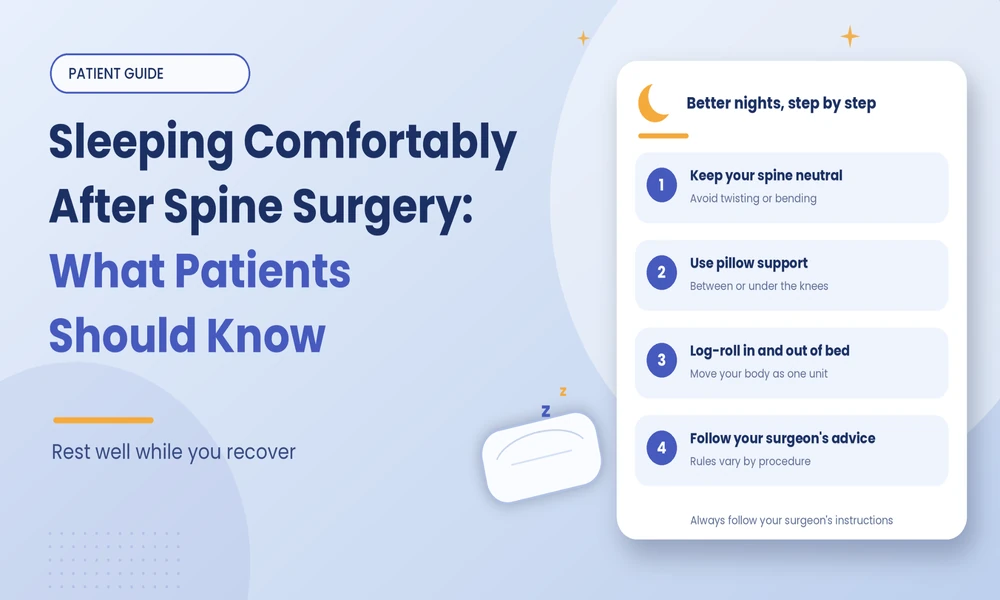
Getting a good night’s sleep is one of the most important parts of recovering after spine surgery. During sleep, the body repairs damaged tissue, reduces inflammation, and restores energy needed for healing. However, many patients find that sleeping comfortably after surgery can be one of the biggest challenges during the early stages of recovery.
Temporary soreness, stiffness, and changes in sleeping position can make it difficult to rest comfortably. Fortunately, with the right strategies and guidance from your healthcare team, many patients gradually find comfortable sleeping positions that support healing while protecting the spine.
Here’s what patients should know about sleeping comfortably after spine surgery.
Why Sleep Matters During Recovery
Sleep plays a major role in the body’s natural healing process.
Quality sleep helps:
- repair tissues
- reduce inflammation
- support the immune system
- improve energy levels
- promote overall recovery
Poor sleep, on the other hand, may contribute to:
- increased discomfort
- slower healing
- fatigue
- irritability
- difficulty participating in rehabilitation
Making sleep a priority is an important part of recovering successfully.
Follow Your Surgeon’s Instructions First
Every spine procedure is different.
Recovery recommendations may vary depending on:
- the type of surgery
- the location of the procedure
- overall health
- individual healing progress
Before trying new sleeping positions or using additional pillows, always follow the specific instructions provided by your surgical team.
Personalized guidance should always take priority over general recommendations.
Choose a Position That Supports Your Spine
Many patients find certain sleeping positions more comfortable than others after spine surgery.
Common recommendations may include:
Sleeping on Your Back
Sleeping on your back often helps keep the spine in a neutral position.
Some patients feel more comfortable by placing a pillow beneath their knees to reduce pressure on the lower back.
Sleeping on Your Side
Side sleeping may also be comfortable for many patients.
Placing a pillow between the knees may help:
- improve spinal alignment
- reduce pressure on the hips
- minimize twisting during sleep
Sleeping on Your Stomach
Many surgeons recommend avoiding stomach sleeping during the early stages of recovery because it may place additional stress on the neck and lower back.
Your surgeon can advise whether this position is appropriate later in recovery.
Use Pillows for Additional Support
Pillows are not only for head support.
They may also help:
- maintain proper alignment
- reduce pressure points
- improve comfort
- prevent unnecessary movement while sleeping
Depending on your sleeping position, additional pillows may be placed:
- beneath the knees
- between the legs
- alongside the body
- under the arms
Proper positioning often makes a significant difference in sleep quality.
Getting In and Out of Bed Safely
One of the most overlooked parts of recovery is learning how to get in and out of bed without placing unnecessary strain on the spine.
Many healthcare providers recommend the “log roll” technique.
This involves:
- rolling onto your side
- moving your legs together
- using your arms for support
- avoiding twisting your back
Learning proper movement techniques helps protect the surgical area during recovery.
Keep Pain Well Managed
Pain can make it difficult to fall asleep or stay asleep.
Following your prescribed pain management plan may help improve comfort during the night.
This may include:
- taking medication as directed
- using ice if recommended
- following activity guidelines
- avoiding strenuous movement before bedtime
Never adjust medications without first consulting your healthcare provider.
Create a Comfortable Sleep Environment
A relaxing bedroom environment may also improve sleep quality.
Helpful habits include:
- maintaining a comfortable room temperature
- reducing noise
- limiting screen time before bed
- following a regular sleep schedule
- using supportive bedding
Small changes to your nightly routine can make falling asleep easier during recovery.
Stay Active During the Day
Although rest is important, gentle activity is also an important part of recovery.
Following your surgeon’s recommendations for walking and light movement may help:
- reduce stiffness
- improve circulation
- maintain muscle strength
- support better sleep at night
Avoid remaining in bed all day unless specifically instructed by your medical team.
Recovery Takes Time
Many patients become discouraged if sleeping remains uncomfortable during the first few days or weeks.
It’s important to remember that healing is a gradual process.
Factors influencing recovery include:
- the type of procedure
- overall health
- age
- physical condition
- adherence to rehabilitation instructions
As healing progresses, sleep often becomes more comfortable.
Modern Spine Surgery Is Improving Recovery
Advances in surgical techniques have helped improve the recovery experience for many patients.
Smaller incisions, muscle-preserving approaches, and minimally invasive procedures may reduce post-operative discomfort and allow patients to regain mobility sooner compared to traditional open surgery in appropriate cases.
At inspired spine, specialists focus on advanced treatment approaches that help patients recover as comfortably and safely as possible while developing personalized care plans based on each individual’s condition and recovery goals.
When Should You Contact Your Surgeon?
While mild discomfort is expected during recovery, patients should contact their healthcare provider if they experience:
Prompt communication with your care team can help address concerns before they become more serious.
Sleeping comfortably after spine surgery can take time, but the right sleeping position, proper support, safe movement techniques, and following your surgeon’s recommendations can make recovery much easier. Quality sleep plays a vital role in healing, helping the body repair tissue and regain strength after surgery.
If you’re preparing for or recovering from Spine surgery, understanding how to protect your spine while resting can support a smoother recovery and help you return to your daily activities with greater confidence.

