

Published by Dakota Chiropractic | Apple Valley, MN
If you have been putting off booking a chiropractic appointment because you are not entirely sure what happens during one, you are not alone. A surprising number of people who could genuinely benefit from care never schedule that first visit because the uncertainty feels like a reason to wait. At Dakota Chiropractic in Apple Valley, MN, the most common thing new patients say after their first appointment is that it was nothing like what they expected, and that they wish they had come in sooner.
The hesitation usually comes from a mix of things: not knowing what a chiropractor actually does during an exam, being nervous about adjustments, or having seen a dramatic cracking video online and wondering if that is representative of what they are signing up for. Some of it is also just the discomfort of walking into a clinical environment and being assessed by someone new.
What follows is an honest, practical account of what a first chiropractic visit actually involves, based on how new patient appointments are structured at this clinic. No vague reassurances, just a clear picture of what to expect.
Before You Walk Through the Door
Once you book your appointment online or by phone, you will receive a confirmation email and a link to complete new patient intake forms before your visit. Getting these done in advance is genuinely worth the few minutes it takes. It means your time in the office is spent on the exam and conversation rather than paperwork, and it gives the doctor a chance to review your history before you meet.
The forms cover the basics: current symptoms, health history, any previous injuries or surgeries, medications, and what brings you in. You will also be asked about things that might seem less obviously relevant, like sleep quality, stress levels, and daily activity. These details matter more than most patients initially expect, because they shape both the exam and the treatment approach.
Wear comfortable clothing you can move in easily. Nothing special is required, but athletic wear or clothes that allow you to sit, bend, and stand freely will make the exam portion more comfortable. You do not need to bring anything, though if you have recent imaging like X-rays or an MRI related to your concern, bringing those along can be useful.
Arriving at the Clinic
The front desk team at Dakota Chiropractic will check you in, confirm your insurance details if applicable, and get you settled. The office is designed to feel more like a calm, welcoming space than a clinical waiting room, which matters more than it might sound when you are already a little nervous.
New patient appointments are scheduled for 40 minutes. That is intentionally longer than what you might experience at a standard medical visit because the goal is not to rush through a symptom checklist and hand over a prescription. The extra time is spent on a real conversation about what is happening in your body and what you are hoping to change.
The Consultation: Your Whole Story, Not Just Your Symptoms
The appointment begins with a thorough consultation with Dr. Hannah. This is a proper conversation, not a form being read back to you. She will ask about your current symptoms in detail: where you feel pain or discomfort, when it started, what makes it better or worse, whether it is constant or intermittent. She will also ask how your symptoms are affecting your day-to-day life, which matters both clinically and for setting realistic goals.
This is also when your broader health picture gets discussed. Past injuries, previous treatments and whether they helped, lifestyle factors, occupation, how much you sit or stand during the day. Patients who come in for low back pain are sometimes surprised to be asked about their sleep position or work setup, but these factors directly influence spinal mechanics and, ultimately, the treatment plan.
Questions are encouraged during this part of the visit. If you have been wondering whether chiropractic is the right fit for what you are dealing with, this is the time to ask.
The Physical Exam: What Is Actually Being Assessed
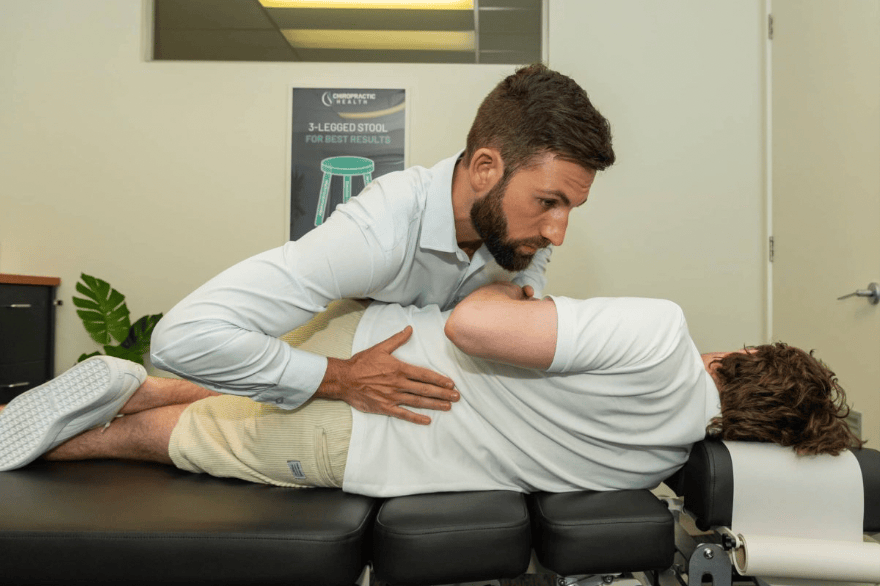
After the consultation, Dr. Hannah will conduct a comprehensive physical exam. This typically includes postural assessment, range-of-motion testing for the affected areas of the spine, orthopedic and neurological tests depending on your presentation, and hands-on palpation of the spine to identify areas of restricted movement, tenderness, or muscle guarding.
Palpation is worth demystifying. It is the process of the doctor using their hands to feel the spine, the surrounding muscles, and the soft tissue. It is not uncomfortable for most patients, though areas that are already inflamed or tender may be sensitive to touch. The exam is not designed to provoke pain, but to identify what is actually happening structurally.
Depending on what the exam reveals, imaging such as X-rays may be recommended. This does not always happen at the first visit and is not routine for every patient. It is recommended when there is a clinical reason to look more closely at the bony structures of the spine, for example if there has been trauma, if symptoms suggest disc involvement, or if the exam findings point to something that warrants a clearer picture.
Your Personalized Treatment Plan
The new patient process at Dakota Chiropractic is completed across two appointments. The first covers the consultation and exam. The second visit is the Report of Findings, where Dr. Hannah reviews what she found and presents a treatment plan built specifically around your situation and goals.
The treatment plan is not a one-size-fits-all schedule. It reflects your specific diagnosis, the severity of your presentation, your health goals, and practical factors like your schedule and insurance coverage. You will know what care is recommended, why, how long it is expected to take, and what it will cost before committing to anything.
Some patients receive their first adjustment during this second visit. Others may have had gentle care at the initial appointment depending on their presentation. Either way, the progression is deliberate and explained at each step.
What Adjustments Actually Feel Like
This is the part most people are most curious and most apprehensive about. Chiropractic adjustments are not painful. The sensation varies by technique and by the individual patient, but the most common descriptions from first-timers are that it felt like a release of pressure, that it was surprisingly gentle, or that there was an audible pop that sounded more dramatic than it felt.
That audible sound, when it occurs, is simply a release of gas from the joint space as pressure changes. It is not bones cracking or anything structurally significant. Not every adjustment produces that sound, and its absence does not indicate a less effective treatment.
For patients who are nervous about manual adjustments, Dakota Chiropractic also uses the Activator technique, a small handheld instrument that delivers a precise, low-force impulse to the joint. It is one of the most widely researched chiropractic tools and is particularly well-suited for patients who are apprehensive, elderly, or who have conditions that make manual adjustment less appropriate.
What to Expect After Your First Adjustment
Many patients feel immediate relief after their first adjustment, particularly a sense of looseness or reduced tension. Some feel nothing dramatic, which is equally normal, especially when the problem has been building for a long time. Occasionally, patients experience mild soreness in the treated area for 24 to 48 hours, similar to the feeling after an unfamiliar workout.
That post-treatment soreness, when it happens, is not a sign that something went wrong. It is the body responding to joint motion being restored in areas that have been restricted. Staying well hydrated afterward helps significantly. Light movement, avoiding prolonged static postures, and applying ice if needed are all reasonable measures if you feel tender.
One Practical Thing Worth Knowing About Insurance
Before your first visit, the team at Dakota Chiropractic will run your insurance to determine your chiropractic benefits. Many plans cover chiropractic care either fully or partially. If your insurance does not include chiropractic coverage, or if you prefer not to use it, private pay options and transparent pricing are available. A superbill can also be provided for self-submission to insurance if needed.
The goal is to make sure you understand your financial picture before treatment begins, not after. There are no surprises built into this process.
Ready When You Are: Getting Started at Dakota Chiropractic
The first appointment at Dakota Chiropractic is designed to answer the question you are really asking, which is whether chiropractic care can actually help with what you are dealing with. A thorough exam and a candid conversation with Dr. Hannah will give you a clear answer either way, along with a specific plan if the answer is yes.
There is no obligation to commit to ongoing care before you understand your situation. The first visit is a genuine evaluation, not a sales process. If you are in the Apple Valley or Twin Cities area and have been on the fence about booking, the simplest next step is to schedule that first appointment and see what the exam actually shows.


