

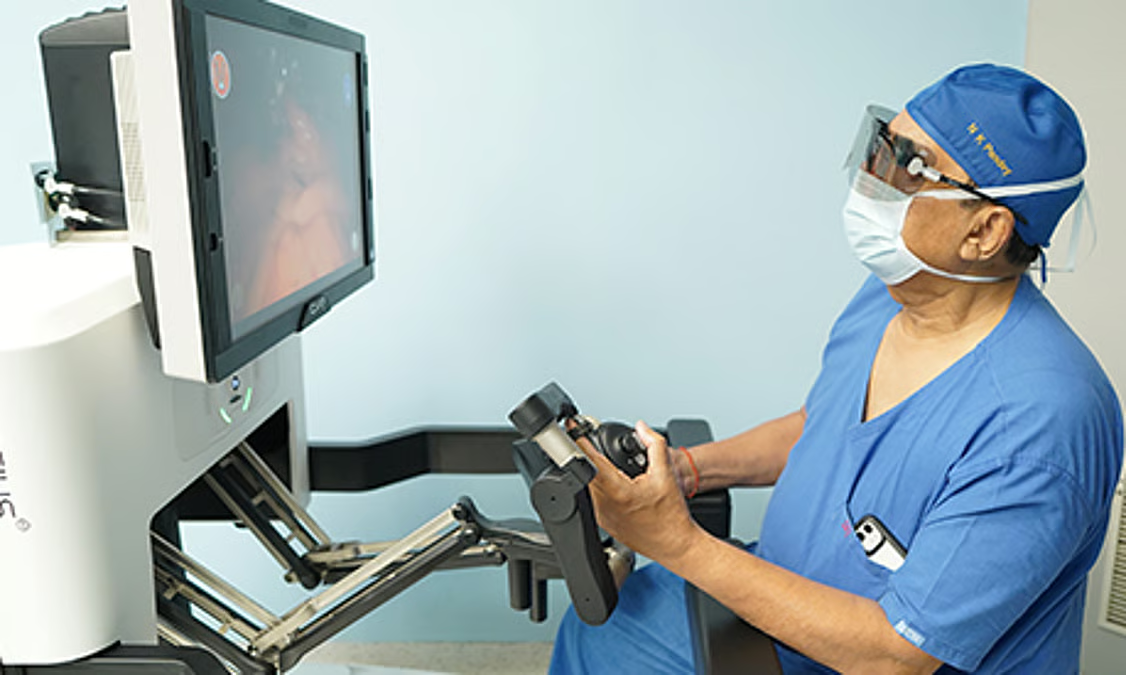
The use of robotics in surgery is one of the most fascinating developments of the modern era in the ever-evolving area of medicine. In addition to being a technological advancement, robotics in surgery represents a paradigm shift in the way medical practitioners handle difficult procedures. Artificial intelligence, sophisticated robotics, and state-of-the-art imaging are being used in this new era of precision medicine to transform patient care, lower surgical risks, and speed up recovery. This article will discuss how robots are transforming the surgical fields.
Doctors trained by the prestigious robotic surgery institute are paving fresh ways to provide modern treatment, thanks to the precision and control that the robotic system offers within the operating room.
Robotics’ Ascent in Surgery
Robotic surgery is not as far-fetched as it might appear. In reality, the “PUMA 560” robotic arm helped with a neurosurgical biopsy in 1985, marking the first successful robotic-assisted surgery. But robotic devices did not start to play a bigger part in the operating room until the late 1990s and early 2000s. The da Vinci Surgical System, which was introduced in 2000, changed the game by enabling surgeons to do minimally invasive treatments with unprecedented precision.
Robotic Surgery: Robotic Surgery Institute Training Doctors
The employment of robotic technology to carry out or support surgical procedures is known as robotic surgery. These robots may help with anything from basic activities to more complex, delicate procedures, and they are usually operated by surgeons using consoles. In order to enable the surgeon to perform precise motions with exceptional accuracy, the surgical robot is frequently outfitted with sophisticated tools like high-definition 3D cameras, surgical instruments, and precision-control systems.
A new era of precision medicine is being ushered in by robotic surgery. It improves surgeons’ skills, lowers patient dangers, and speeds up recuperation as they get trained by mentors in proper environments. The potential advantages of robotic surgery are enormous and revolutionary, despite obstacles including high costs, scarcity, and the requirement for qualified professionals. The future of robotic surgery offers even more groundbreaking developments due to continuous technological improvements and an expanding body of research, which will ultimately improve patient outcomes and provide access to high-quality surgical care globally.


